

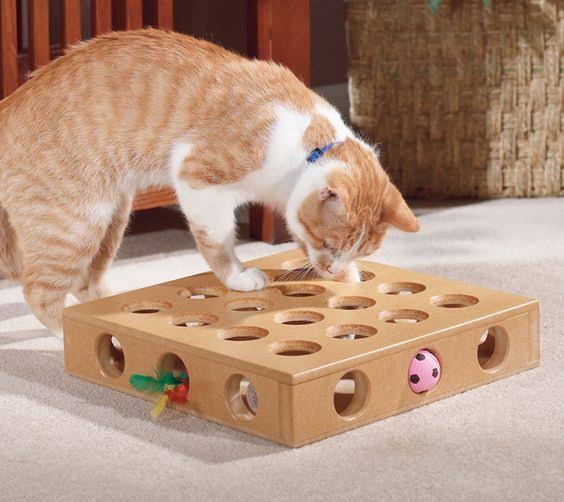
Pet enrichment has come a long way from basic chew toys and dangling feathers. Today’s pet owners are discovering that mental stimulation is just as important as physical exercise — especially for intelligent small animals and curious young cats. One of the most effective tools for engaging sharp little minds? Interactive puzzle boards.
At first glance, puzzle boards may look simple. They’re typically flat trays designed with compartments, sliding panels, flip lids, pegs, or hidden wells. But don’t let their clean design fool you. Once treats are tucked inside, these boards become miniature problem-solving arenas. Pets must sniff, paw, nudge, slide, or lift pieces in order to uncover their rewards. It’s part snack time, part brain game — and entirely enriching.
Why Mental Enrichment Matters
Rabbits, guinea pigs, ferrets, and kittens are naturally curious creatures. In the wild, they spend much of their time foraging, exploring, and solving environmental challenges. Domestic life, while safe and comfortable, can sometimes lack the mental stimulation they instinctively crave. When pets don’t have opportunities to think and explore, boredom can creep in.
Boredom in small animals and cats doesn’t always look dramatic. It might show up as restlessness, cage bar chewing, excessive digging, over-grooming, or general lethargy. For kittens, it can mean pouncing on ankles or climbing curtains. Interactive puzzle boards help redirect that energy into something constructive and rewarding.
By encouraging pets to work for their treats, puzzle boards recreate the natural foraging process. Instead of simply finding food in a bowl, animals must investigate and manipulate their environment. This taps into deeply rooted instincts and provides a healthy mental workout.
How Puzzle Boards Build Problem-Solving Skills
One of the greatest benefits of interactive puzzle boards is their ability to build cognitive skills. Pets quickly learn that certain actions lead to rewards. Slide a panel — a treat appears. Lift a lid — another reward. Push a peg — success.
Over time, pets begin to remember patterns and experiment with new strategies. Rabbits may use their noses with increasing precision. Guinea pigs might learn to nudge pieces aside with surprising dexterity. Ferrets, known for their cleverness, often approach puzzles with persistent determination. Kittens, especially, thrive on this type of challenge as it satisfies both their hunting instincts and their playful curiosity.
These small victories boost confidence. When pets successfully solve puzzles, they experience positive reinforcement that keeps them coming back for more. Just like humans enjoying a crossword or brain teaser, animals benefit from the mental engagement and sense of accomplishment.
Especially Ideal for Intelligent Small Pets
Not all pets are content simply chewing or chasing. Many small animals are thinkers at heart. Rabbits, for example, are highly intelligent and can even learn their names or basic commands. Guinea pigs recognize routines and respond to familiar voices. Ferrets are famously mischievous problem-solvers. And kittens? They are tiny bundles of investigative energy.
For these pets, interactive puzzle boards offer the perfect outlet. Rather than focusing solely on physical activity, puzzle boards challenge the brain. They’re particularly useful for indoor pets who may not have as much environmental variety as their wild counterparts.
Puzzle boards are also gentle enrichment tools. Unlike some chew-based toys, they don’t rely on aggressive gnawing or high-energy play. This makes them ideal for pets who prefer thoughtful interaction over rough activity.
Reducing Boredom and Unwanted Behaviors
A mentally stimulated pet is often a calmer pet. When animals have opportunities to engage their brains, they are less likely to develop destructive or repetitive behaviors. A rabbit working on a puzzle is less likely to chew furniture. A ferret focused on uncovering treats is less likely to dig at carpeting. A kitten who has spent energy solving a challenge may be less inclined to ambush your toes later.
Puzzle boards can also help slow down fast eaters. By spreading food portions across compartments, pets consume their treats more gradually. This not only extends engagement time but can support healthier digestion.
Getting Started with Puzzle Boards
Introducing a puzzle board should be a positive experience. Start simple. Place treats in easy-to-access compartments so your pet quickly understands the concept. Once they grasp the idea, increase the difficulty by using sliders or covered wells.
Supervision is important during the first few sessions to ensure your pet interacts safely with the board. Choose models made from durable, pet-safe materials and sized appropriately for your animal.
To keep interest high, rotate puzzle boards with other enrichment activities. Just like humans, pets enjoy variety. Even using the same board but hiding different treats can renew excitement.
A Smarter Way to Play
Interactive puzzle boards are more than trendy pet accessories — they’re tools for enrichment, learning, and emotional well-being. By transforming treat time into thinking time, these boards provide meaningful engagement for rabbits, guinea pigs, ferrets, and kittens alike.
For intelligent small pets who would rather think than chew, puzzle boards offer the perfect balance of challenge and reward. They turn ordinary afternoons into stimulating adventures and help ensure that even indoor pets live mentally rich, fulfilling lives.
Because sometimes, the best way to care for a pet isn’t just to feed or entertain them — it’s to challenge them.
We would like to know what you think. Share your thoughts below.